
Three sides, no shelter
Most "coastal" suburbs have a beach on one side and shelter behind. The Tomaree Peninsula doesn't. Port Stephens sits to the north, the Pacific to the east and south, and the salt rides in on the nor'easter across the bay just as surely as it comes off the surf at Fingal and Anna Bay. A garage door here gets no leeward side of town to hide in. The same air that pits a boat's fittings at their moorings works on your door's hardware every day the wind blows, which is most of them.
What fails, in the order it fails
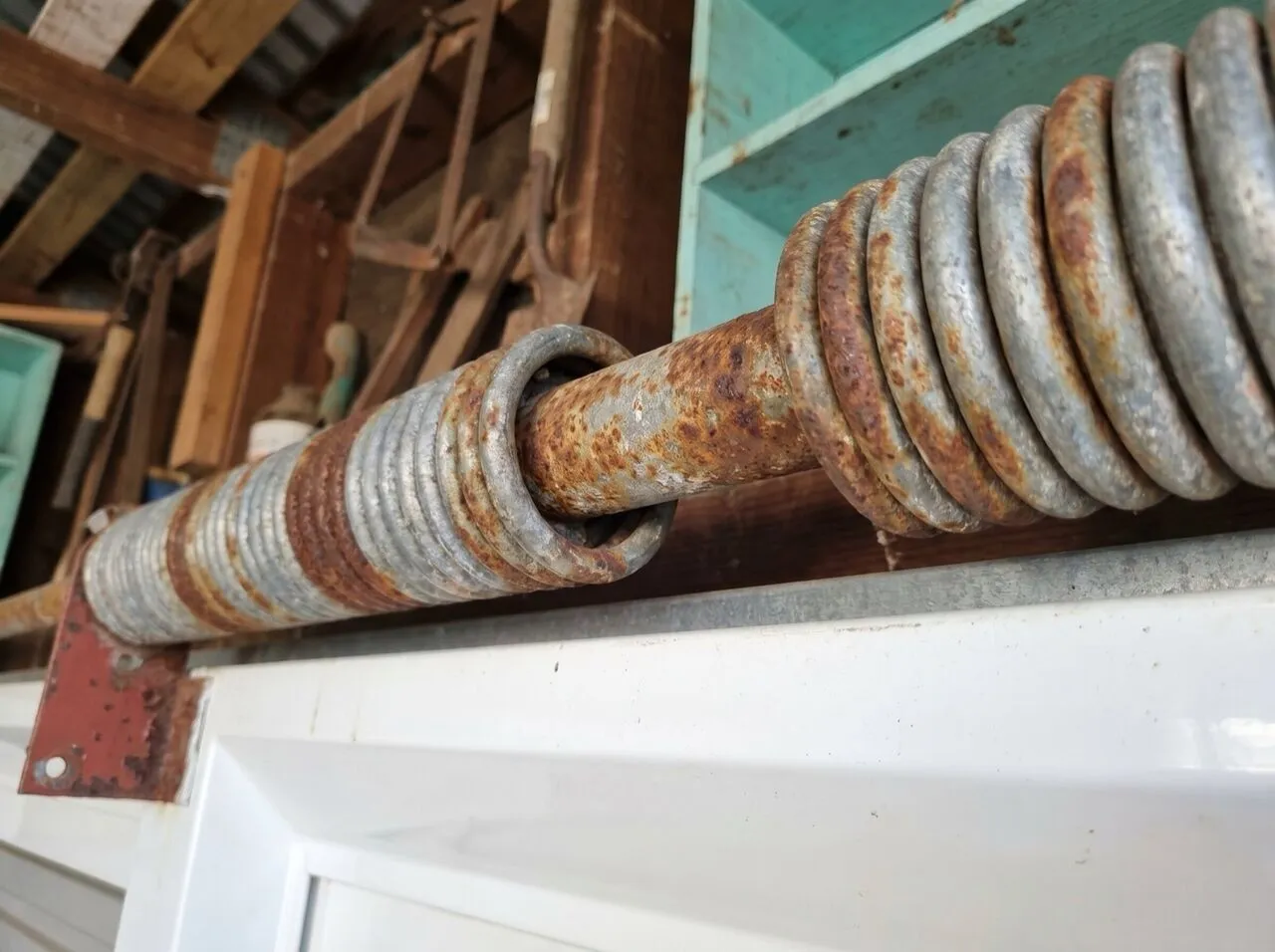
- The torsion spring. The coil above the door does the actual lifting, wound to a tension that balances the door's weight. Salt pitting on the coil face concentrates stress, and a pitted spring doesn't wear out politely; it lets go, usually with a bang you'll hear from the kitchen. This is the single most common urgent call we get.
- The lift cables. Braided steel, anchored at the bottom fittings where spray and washdown water pool. Fraying starts one strand at a time, low on the cable where nobody looks. A cable that lets go takes the door out of square and often off its track.
- Rollers and tracks. The rollers pit, the track face roughens, and the door starts grinding where it used to hum. This is the noisy, gradual one, and it's the early warning most people get if they're home to hear it.
- Hinges and fittings. The squeal between panels. Cheap to catch, annoying to ignore, and a tell that the grease is gone everywhere else too.
- The opener's rail and chain. The motor lives indoors but its steel doesn't care; a dry, salt-dusted rail loads the motor harder every cycle.
Why coastal failure is sudden, not gradual
Inland, a door ages the way you'd expect: slowly, with warnings. Here the failure curve has a cliff in it. Corrosion pitting doesn't remove strength evenly; it creates weak points in parts that are under load every single cycle. The spring carries the door's whole weight in stored tension, so when a pitted coil reaches its limit, there is no halfway. That's the honest reason we bang on about the schedule: on this peninsula you rarely get the slow warning. You get the bang.
Everything that lives in salt gets inspected and greased on a schedule, before it fails. That's not marketing; it's how the port has always kept hulls in the water.
The haul-out discipline, applied to a door
A slipway yard slips a working boat on a rhythm: haul it, check it, grease it, run it, back in the water. The door version is the coastal service: springs re-tensioned and the coil read, cables checked strand by strand at the fittings, rollers and tracks cleaned and greased, the opener's force and safety gear tested. Close to the water, twice a year earns its keep. Further back, yearly does it.
What you can do yourself
- Rinse the door skin and the visible track faces with fresh water now and then, the same reason you rinse the boat and the rods. Salt that doesn't sit can't pit.
- Listen. A door that's started grinding, squealing or banging is telling you something cheap. Six months of ignoring it is usually what turns it expensive.
- Know where the red manual release cord is before a blackout, not during one.
What only a technician should touch
- Springs and cables. Always. They hold the door's full weight in stored tension, and both are genuinely dangerous to adjust without the tools and the training. No exceptions, including the confident ones.
- Anything on the mains side of the opener: that's licensed electrical work in NSW, confirmed and handled on site.
If the door already dropped with a bang: don't lift it by hand, don't run the opener. Book the repair and leave it where it sits.
References
- ACCC Product Safety: garage door openers. The national recall and safety-notice register for opener hardware; worth a search if you've inherited an older opener with the house.
- Standards Australia, AS/NZS 60335.2.95. The safety standard covering automatic garage door drives, including the auto-reverse behaviour your opener's safety beams exist to serve. We describe it here so you know it exists; compliance of a specific product is a manufacturer's claim, not ours.
- NSW Government: electrical work licensing. Why the mains connection to an opener is a licensed electrician's job in this state, whoever fits the door.